The Obedience That Left Everything Behind
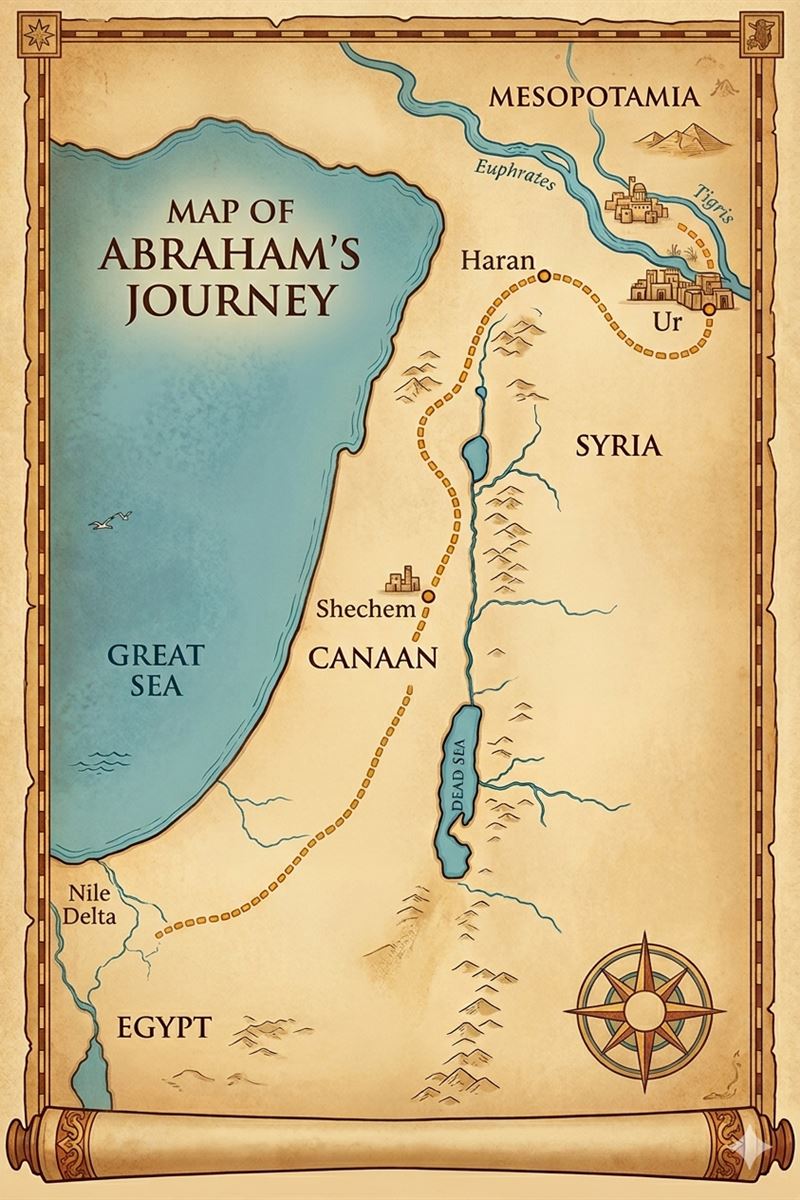
Abraham believed and obeyed the call of Jehovah (Christ pre-incarnate) to journey to a land he would show him. He left Haran — a place of fleshly comfort and idolatry rooted in Ur of the Chaldees. Haran was the place where Abraham's own brother of the flesh died, and that death permanently halted his father Terah. Terah had himself begun the journey toward Canaan the promised land, but when his son died in Haran he settled there and never moved again. The death of a loved one became the death of his calling. The flesh governed Terah.
The Lord of glory appeared again to Abraham in Mesopotamia calling him Acts 7:2-4. Abraham was born when Terah was seventy-five years old, and Abraham left Haran at seventy-five, meaning Terah was one hundred and fifty years old when his son obeyed. Terah would live another fifty-five years, dying at two hundred and five. Though Stephen in Acts 7 preached that Abraham departed after his father died, the Genesis record shows Terah was still alive — a vivid and sobering picture of the delicate cost of true obedience. To fully obey God, Abraham had to leave what was unfinished, unresolved and still living. He forsook his land of birth, his relatives and his idols — pursuing by faith the invisible yet glorious God who had appeared to him in Mesopotamia — seeking, as Scripture declares, a city whose builder and architect is God.